Affiliate disclosure: As an Amazon Associate, GadgetWiseReviews earns from qualifying purchases. Prices and availability can change; check the current listing before ordering.
A robot vacuum saves effort by cleaning accessible floors on a schedule. A cordless vacuum gives you direct control over the mess in front of you. Neither is automatically the better purchase: the answer depends on what you clean, how your rooms are laid out, and which job you most want to stop doing.
The short answer
If you do not already own a suitable vacuum, a cordless model is usually the more versatile first purchase. It can address floors and, with suitable attachments, stairs or furniture. A robot makes more sense as a maintenance cleaner when your main frustration is repeatedly cleaning the same open floor areas.
| Your situation | Likely starting point | Main limitation |
|---|---|---|
| Stairs and upholstery | Cordless vacuum | You do the cleaning |
| Open floors needing frequent upkeep | Robot vacuum | Requires accessible paths |
| Small, sudden spills of dry debris | Cordless vacuum | Needs charging and storage |
| Several cluttered rooms | Clear obstacles before choosing | Automation cannot remove clutter |
1. Walk through your home before comparing specifications
Check the places that collect dirt: under dining chairs, beside the sofa, on stairs, and around pet bedding. A robot is useful only where it can travel. Measure furniture clearance, inspect raised thresholds, and consider loose cables, rug fringes, and small objects that may interrupt a run.
For a cordless vacuum, think about carrying weight and reach. A machine that feels manageable for a quick showroom lift may feel different when cleaning stairs or holding an attachment overhead. Storage matters too: choose an accessible charging location that follows the manufacturer's installation instructions.
2. Separate daily upkeep from full cleaning
Robot cleaning is most compelling when it prevents everyday debris from accumulating. That does not make it a replacement for every cleaning task. Stairs, upholstery, awkward corners, and areas behind closed doors still need attention. Decide which tasks remain and whether your existing equipment can handle them.
A cordless vacuum suits targeted cleaning because you can move straight to the mess. However, advertised runtime may depend on power mode, attachments, and floor conditions. Check those conditions rather than assuming a headline runtime applies to your entire home on maximum suction.
3. Treat pet hair and pet accidents differently
Frequent floor cleaning can help manage shed hair, but brushes, filters, and bins still need maintenance. Look at how the brush assembly comes apart and whether replacement parts are readily available. Long hair can make easy access to the brush more useful than another app feature.
Do not assume obstacle detection will reliably avoid every pet accident. Inspect floors before an unattended run, especially with a puppy or an unwell animal. A vacuum spreading a mess is worse than postponing a cleaning cycle. Follow the manual for what the machine may collect; a dry vacuum should not be used for liquid spills unless it is explicitly designed for that job.
4. Count the maintenance you will still do
A self-emptying dock moves debris into another container; it does not eliminate disposal, filter care, or brush cleaning. Robot models that mop may add water tanks and pad maintenance. Check those tasks on the exact configuration you plan to buy, because similarly named models can include different docks.
Cordless machines also need routine care. Check filter instructions, dust-bin emptying, battery replacement options, and the availability of compatible tools. Compare the full ownership cost, including consumables, rather than the appliance price alone.
5. Decide whether connectivity helps you
Mapping and schedules can make a robot convenient, but check app requirements and which controls remain available without an internet connection. Consider whether you are comfortable with the manufacturer's privacy settings and account requirements. If you want a straightforward appliance without another app, that preference should influence your shortlist.
Models to investigate
The iRobot Roomba j9+ and Roborock Saros 10R are robot options already covered on this site; the Dyson V15 Detect is a cordless option. Read the individual reviews, then verify current model specifications, dock contents, replacement parts, and warranty on the seller's listing. This comparison is about the categories, not a new laboratory performance test.
iRobot Roomba j9+
Read our iRobot Roomba j9+ review
Roborock Saros 10R
Read our Roborock Saros 10R review
Dyson V15 Detect
Read our Dyson V15 Detect review
The bottom line
Choose cordless first for flexibility, especially when stairs and furniture are part of the job. Choose a robot first when you already have a way to handle those tasks and want regular floor upkeep with less hands-on work. Buying both only makes sense when they perform genuinely different jobs in your home.
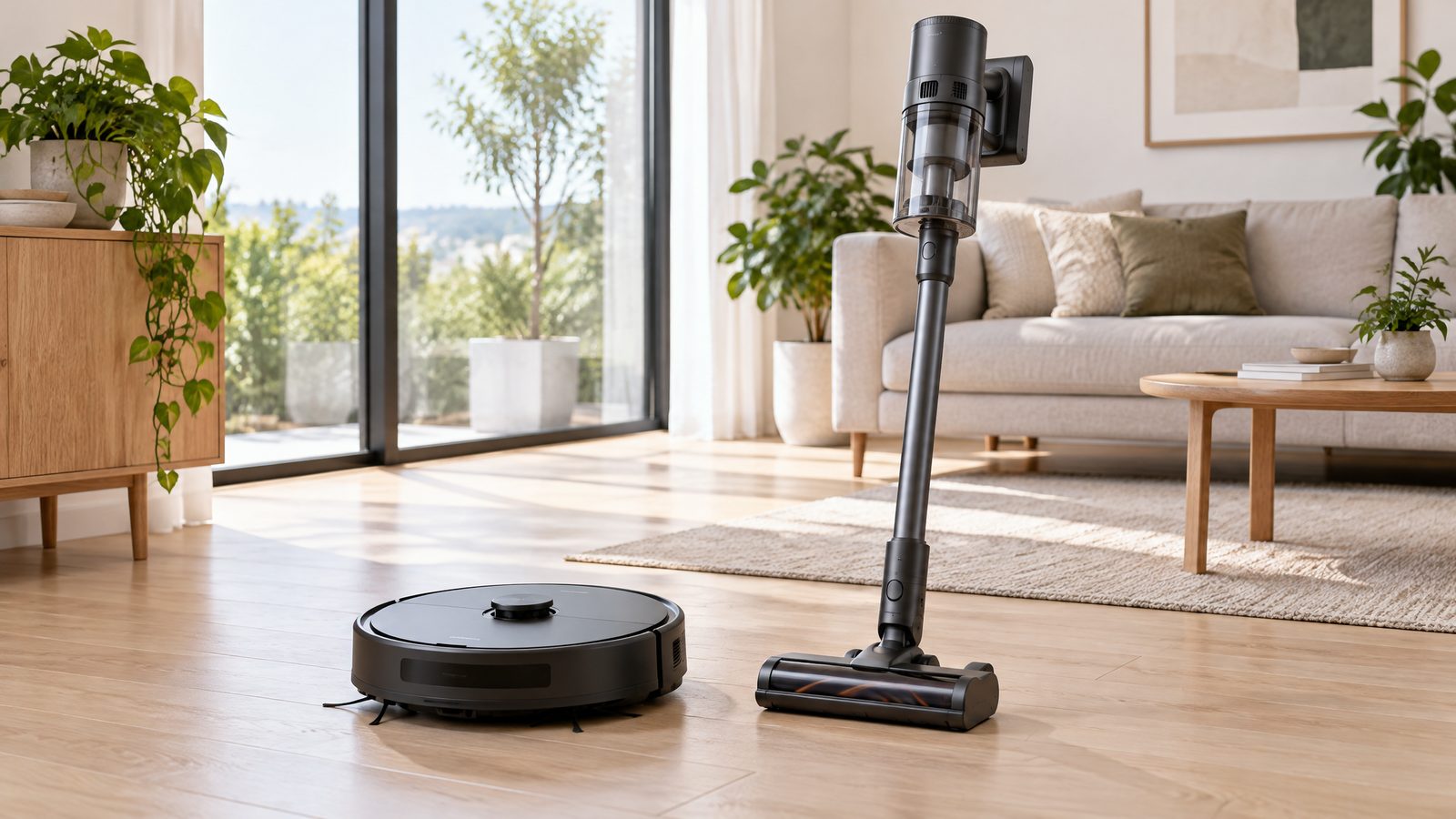
Editorial category comparison, not a new hands-on test. Hero image is an original AI-generated illustration of product categories, not an exact model photograph.
You Might Also Like
Related Reviews




Get our free weekly deals roundup
Hand-picked tech deals, price-drop alerts, and buying guides — every week. No spam, unsubscribe anytime.